Free Step 1-style question
Severe anorexia nervosa + day 3 of aggressive enteral refeeding + dyspnea + edema + PVCs + hypophosphatemia + hypokalemia + hypomagnesemia = refeeding syndrome
A 21-year-old woman is hospitalized for management of severe anorexia nervosa. She has a body mass index of 13.5 kg/m². Her heart rate is 48/min and blood pressure is 88/54 mm Hg. Physical examination shows fine, downy hair on her arms and legs and mild abdominal distention without organomegaly. On the third day of hospitalization, while receiving aggressive nutritional repletion with enteral feeding, she develops shortness of breath, generalized muscle weakness, and peripheral edema. Repeat physical examination shows new bibasilar crackles and bilateral 2+ pitting pedal edema. An electrocardiogram reveals sinus tachycardia with occasional premature ventricular contractions. Laboratory studies are shown below.
| Test | Value | Reference range |
|---|---|---|
| Serum phosphorus | 1.1 mg/dL | 2.5–4.5 mg/dL |
| Serum potassium | 3.0 mEq/L | 3.5–5.0 mEq/L |
| Serum magnesium | 1.2 mg/dL | 1.5–2.5 mg/dL |
Which of the following is the most likely diagnosis?
- A. Acute thiamine deficiency
- B. Kwashiorkor
- C. Marasmus
- D. Refeeding syndrome
- E. Volume overload due to renal failure
Correct answer: D. Refeeding syndrome
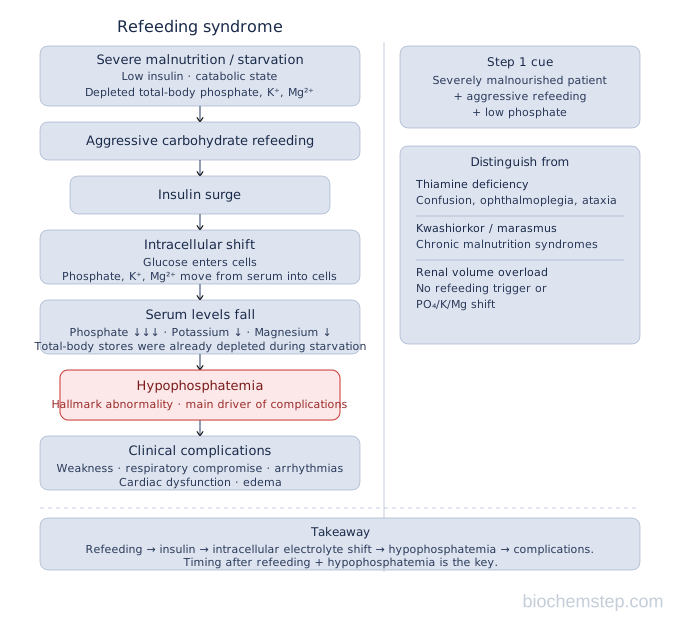
This patient has refeeding syndrome, a potentially fatal complication that occurs when nutrition is rapidly reintroduced to a severely malnourished patient. During prolonged starvation, the body adapts to a catabolic state, and total body stores of phosphorus, potassium, and magnesium become depleted even if serum levels are initially normal. When carbohydrate feeding is restarted, insulin secretion increases and drives glucose, phosphorus, potassium, and magnesium into cells. Phosphorus is also rapidly consumed for synthesis of adenosine triphosphate and other phosphorylated intermediates. The resulting hypophosphatemia is the hallmark abnormality and the main driver of clinical complications. Patients can develop muscle weakness, respiratory compromise, arrhythmias, decreased cardiac contractility, and fluid retention with edema and crackles.
Takeaway
Refeeding syndrome occurs when rapid nutritional repletion in a severely malnourished patient triggers an insulin surge and causes intracellular shifts of phosphorus, potassium, and magnesium. Hypophosphatemia is the hallmark abnormality and can lead to arrhythmias, respiratory failure, cardiac dysfunction, edema, and neurologic symptoms.
What this page covers
Practice Step 1-style biochemistry questions on Refeeding syndrome diagnosis, including Severe anorexia nervosa, day 3 of aggressive enteral refeeding, dyspnea, edema, PVCs, hypophosphatemia, hypokalemia, hypomagnesemia, with emphasis on clinical diagnosis vignette and answer-choice reasoning.
Step 1 practice focus
This preview is organized around Refeeding syndrome diagnosis in Refeeding Syndrome within Nutrition. It is intended for students practicing clinical diagnosis vignette questions, where the goal is to connect the vignette clue pattern to the underlying biochemical pathway, enzyme defect, metabolite change, regulatory step, or physiologic consequence.
How to use this page
Review the topic and reasoning focus, then practice Step 1-style questions inside BiochemStep. The question set emphasizes mechanism-first answer-choice reasoning rather than passive content review.