Free Step 1-style question
Limited DNA sample tested for a known familial pathogenic sequence using targeted molecular testing.
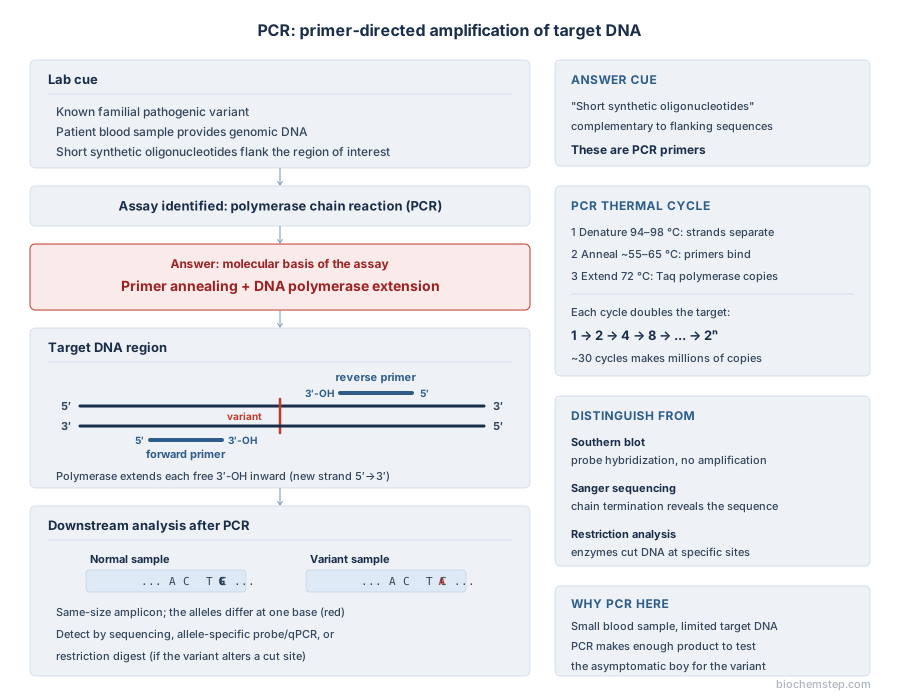
A 6-year-old boy is evaluated because his younger sister was recently diagnosed with a single-gene disorder caused by a known familial pathogenic variant. The patient has no symptoms, but his parents request testing to determine whether he carries the same variant. A small blood sample is obtained, and the laboratory uses short synthetic oligonucleotides complementary to sequences flanking the region of interest before analyzing the product.
Which of the following molecular processes is the basis of this assay?
- A. Amplification of a selected DNA segment by repeated cycles of primer annealing and polymerase extension
- B. Cleavage of double-stranded DNA at specific palindromic recognition sequences
- C. Hybridization of fluorescent probes to intact chromosomes during metaphase or interphase
- D. Separation of nucleic acid fragments through a gel matrix according to molecular size
- E. Transfer of size-separated DNA fragments to a membrane followed by probe hybridization
Correct answer: A. Amplification of a selected DNA segment by repeated cycles of primer annealing and polymerase extension
Use of short synthetic oligonucleotides complementary to sequences flanking a region of interest to increase the quantity of a target DNA segment from a limited blood sample describes polymerase chain reaction. PCR uses short sequence-specific primers that anneal to DNA sequences flanking the target region, followed by extension with a thermostable DNA polymerase through repeated temperature cycles. This selectively amplifies the target DNA segment, allowing detection from a small starting amount of genomic DNA before downstream analysis such as allele-specific probing, restriction analysis, or sequencing.
Takeaway
PCR detects a target DNA sequence by using primers complementary to flanking regions and a thermostable DNA polymerase to amplify the intervening segment. The key distinction from Southern blotting is that PCR amplifies a defined DNA target, whereas Southern blotting detects DNA after digestion, gel separation, transfer, and probe hybridization.
What this page covers
Practice Step 1-style biochemistry questions on PCR primer amplification / target DNA detection, with emphasis on enzyme / mechanism and answer-choice reasoning.
Step 1 practice focus
This preview is organized around PCR primer amplification / target DNA detection in Molecular Diagnostic Techniques within Lab Techniques. It is intended for students practicing enzyme / mechanism questions, where the goal is to connect the vignette clue pattern to the underlying biochemical pathway, enzyme defect, metabolite change, regulatory step, or physiologic consequence.
How to use this page
Review the topic and reasoning focus, then practice Step 1-style questions inside BiochemStep. The question set emphasizes mechanism-first answer-choice reasoning rather than passive content review.