Free Step 1-style question
Toddler with fasting hypoketotic hypoglycemia after illness; tests accumulated metabolites in fatty acid oxidation defect.
An 18-month-old boy is brought to the emergency department because of lethargy after 2 days of fever, vomiting, and poor oral intake. He was previously healthy and had normal growth and development. Physical examination shows somnolence without hepatosplenomegaly. Laboratory studies show severe hypoglycemia, and urinalysis shows minimal ketones despite prolonged fasting.
| Test | Value | Reference range |
|---|---|---|
| Glucose | 38 mg/dL | 70–99 mg/dL |
Which of the following metabolite accumulations would be expected as a direct consequence of the underlying enzyme deficiency?
- A. Branched-chain alpha-ketoacids
- B. Glucocerebroside
- C. Long-chain acylcarnitines
- D. Medium-chain acylcarnitines
- E. Very-long-chain fatty acids
Correct answer: D. Medium-chain acylcarnitines
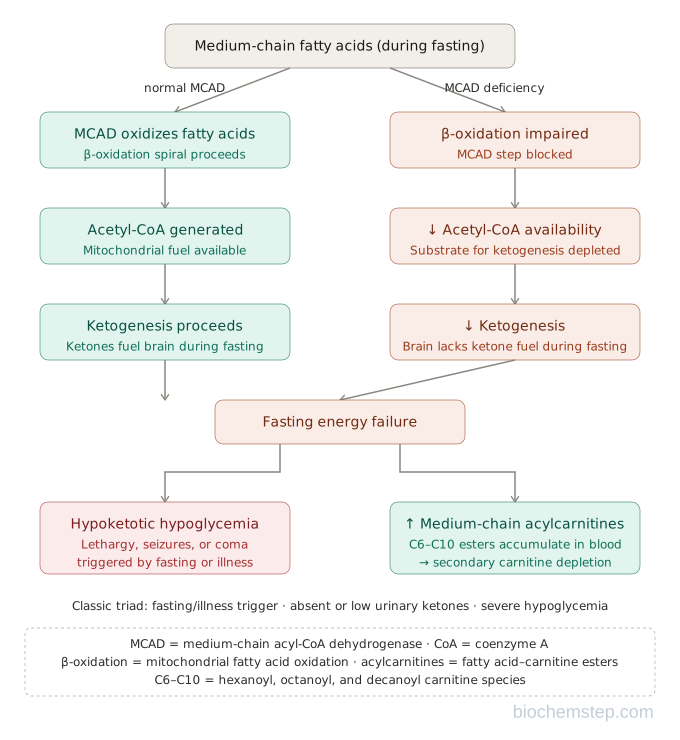
Fasting intolerance during an intercurrent illness, severe hypoglycemia, and inappropriately low ketone production in a previously healthy toddler point to medium-chain acyl-CoA dehydrogenase deficiency. Medium-chain acyl-CoA dehydrogenase catalyzes an early dehydrogenation step in mitochondrial beta-oxidation of medium-chain fatty acyl-CoA molecules. When this enzyme is deficient, medium-chain fatty acyl-CoA intermediates accumulate and are converted to medium-chain acylcarnitines, especially C8 acylcarnitine. Impaired fatty acid oxidation also decreases hepatic acetyl-CoA production, which limits ketogenesis and reduces allosteric activation of pyruvate carboxylase, contributing to hypoketotic hypoglycemia during fasting or illness.
Takeaway
MCAD deficiency causes accumulation of medium-chain acylcarnitines, especially C8 acylcarnitine, and produces fasting hypoketotic hypoglycemia. Long-chain acylcarnitine accumulation points instead toward long-chain fatty acid oxidation or carnitine shuttle defects.
What this page covers
Practice Step 1-style biochemistry questions on MCAD deficiency, with emphasis on metabolic consequence / accumulation / deficiency and answer-choice reasoning.
Step 1 practice focus
This preview is organized around MCAD deficiency in Fatty Acid Oxidation and Transport within Lipid Metabolism. It is intended for students practicing metabolic consequence / accumulation / deficiency questions, where the goal is to connect the vignette clue pattern to the underlying biochemical pathway, enzyme defect, metabolite change, regulatory step, or physiologic consequence.
How to use this page
Review the topic and reasoning focus, then practice Step 1-style questions inside BiochemStep. The question set emphasizes mechanism-first answer-choice reasoning rather than passive content review.