Free Step 1-style question
Young man + sulfonamide trigger + acute hemolysis + bite cells + Heinz bodies = G6PD deficiency
A 20-year-old man comes to the emergency department because of fatigue and yellowing of his eyes for 1 day. Three days ago, he was prescribed trimethoprim-sulfamethoxazole for a skin infection. Physical examination shows scleral icterus and conjunctival pallor. Laboratory studies show anemia, reticulocytosis, and elevated total bilirubin. A peripheral blood smear shows bite cells, and a supravital stain reveals Heinz bodies.
Which of the following best describes the underlying pathogenesis of this patient's anemia?
- A. Decreased ATP production from glycolysis
- B. Decreased production of NADPH in erythrocytes
- C. Defect in erythrocyte membrane skeletal proteins
- D. IgG-mediated erythrocyte opsonization
- E. Loss of GPI-anchored complement regulatory proteins
Correct answer: B. Decreased production of NADPH in erythrocytes
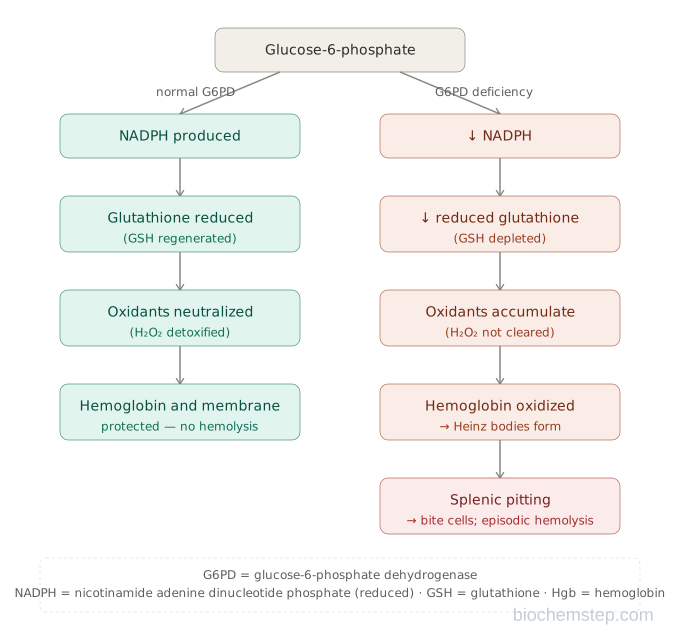
This patient has glucose-6-phosphate dehydrogenase deficiency with oxidant-triggered hemolysis. In erythrocytes, G6PD is the rate-limiting enzyme of the pentose phosphate pathway, which generates NADPH. NADPH is required to maintain reduced glutathione, which protects hemoglobin and the red cell membrane from oxidative injury. When NADPH production is impaired, oxidant stress causes hemoglobin denaturation, forming Heinz bodies. Splenic macrophages then remove these denatured hemoglobin aggregates, producing bite cells and causing acute hemolytic anemia. Infection itself can also contribute to oxidative stress, but the recent sulfonamide exposure is the clearest trigger here.
Takeaway
G6PD deficiency causes episodic hemolytic anemia after oxidative stress from triggers such as sulfonamides, primaquine, dapsone, fava beans, and infection. The core defect is decreased NADPH production, leading to impaired maintenance of reduced glutathione. The classic morphology is Heinz bodies on supravital stain and bite cells on peripheral smear.
What this page covers
Practice Step 1-style biochemistry questions on G6PD deficiency, including Young man, sulfonamide trigger, acute hemolysis, bite cells, Heinz bodies, with emphasis on clinical diagnosis vignette and answer-choice reasoning.
Step 1 practice focus
This preview is organized around G6PD deficiency in Pentose Phosphate Pathway within Carbohydrate Metabolism. It is intended for students practicing clinical diagnosis vignette questions, where the goal is to connect the vignette clue pattern to the underlying biochemical pathway, enzyme defect, metabolite change, regulatory step, or physiologic consequence.
How to use this page
Review the topic and reasoning focus, then practice Step 1-style questions inside BiochemStep. The question set emphasizes mechanism-first answer-choice reasoning rather than passive content review.