Free Step 1-style question
Child with severe isolated hypercholesterolemia and family history of premature coronary artery disease started on lipid-lowering therapy.
A 10-year-old girl is seen at a follow-up visit after a fasting lipid panel was obtained because her mother required coronary bypass surgery at 39 years of age. Repeat fasting lipid testing is shown below. Physical examination is unremarkable. In addition to dietary counseling, the physician prescribes a statin medication.
| Test | Value | Reference range |
|---|---|---|
| Total cholesterol | 358 mg/dL | <170 mg/dL |
| LDL cholesterol | 286 mg/dL | <110 mg/dL |
| Triglycerides | 76 mg/dL | <90 mg/dL |
| HDL cholesterol | 49 mg/dL | >45 mg/dL |
Which of the following hepatic responses most directly accounts for the therapeutic effect of this medication?
- A. Decreased intestinal cholesterol absorption
- B. Decreased VLDL secretion by hepatocytes
- C. Increased hepatic cholesterol conversion to bile acids
- D. Increased hepatic LDL receptor expression
- E. Increased lipoprotein lipase activity in capillaries
Correct answer: D. Increased hepatic LDL receptor expression
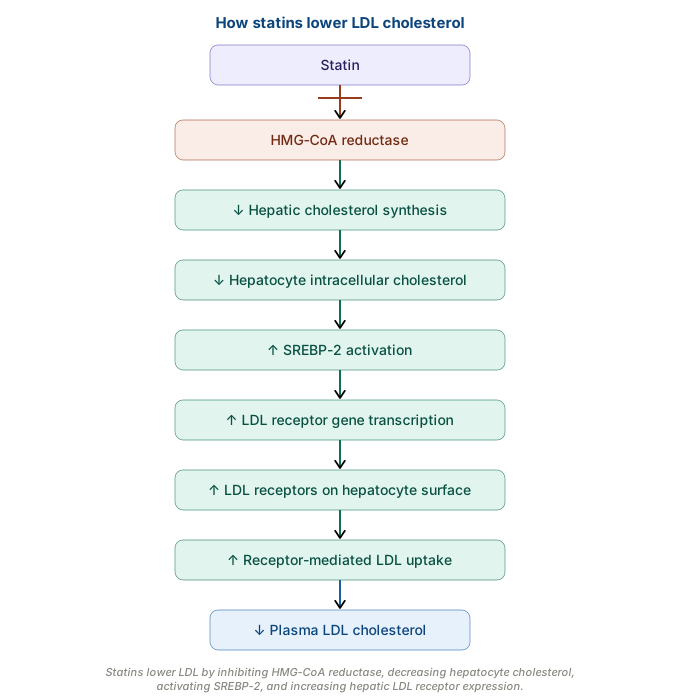
Marked isolated LDL elevation with normal triglycerides in a child whose mother required coronary bypass surgery at 39 years of age points to heterozygous familial hypercholesterolemia. Statins inhibit HMG-CoA reductase, the rate-limiting enzyme of hepatic cholesterol synthesis. Decreased intracellular cholesterol in hepatocytes increases sterol regulatory element-binding protein activity, which promotes transcription of the LDL receptor gene. Increased hepatic LDL receptor expression enhances receptor-mediated uptake of circulating LDL particles, lowering plasma LDL cholesterol. In heterozygous familial hypercholesterolemia, residual LDL receptor function allows statin-mediated receptor upregulation to reduce LDL levels, although additional therapies may be required for adequate control.
Takeaway
Statins lower LDL cholesterol by inhibiting HMG-CoA reductase, which decreases hepatic cholesterol synthesis and increases hepatic LDL receptor expression. This enhances receptor-mediated LDL clearance, whereas fibrates primarily lower triglycerides by increasing lipoprotein lipase activity.
What this page covers
Practice Step 1-style biochemistry questions on Familial hypercholesterolemia, with emphasis on treatment / physiology / regulation and answer-choice reasoning.
Step 1 practice focus
This preview is organized around Familial hypercholesterolemia in Lipoprotein Metabolism Disorders within Lipid Metabolism. It is intended for students practicing treatment / physiology / regulation questions, where the goal is to connect the vignette clue pattern to the underlying biochemical pathway, enzyme defect, metabolite change, regulatory step, or physiologic consequence.
How to use this page
Review the topic and reasoning focus, then practice Step 1-style questions inside BiochemStep. The question set emphasizes mechanism-first answer-choice reasoning rather than passive content review.