Free Step 1-style question
Prenatal infectious disease screening performed using a plate-based serum assay.
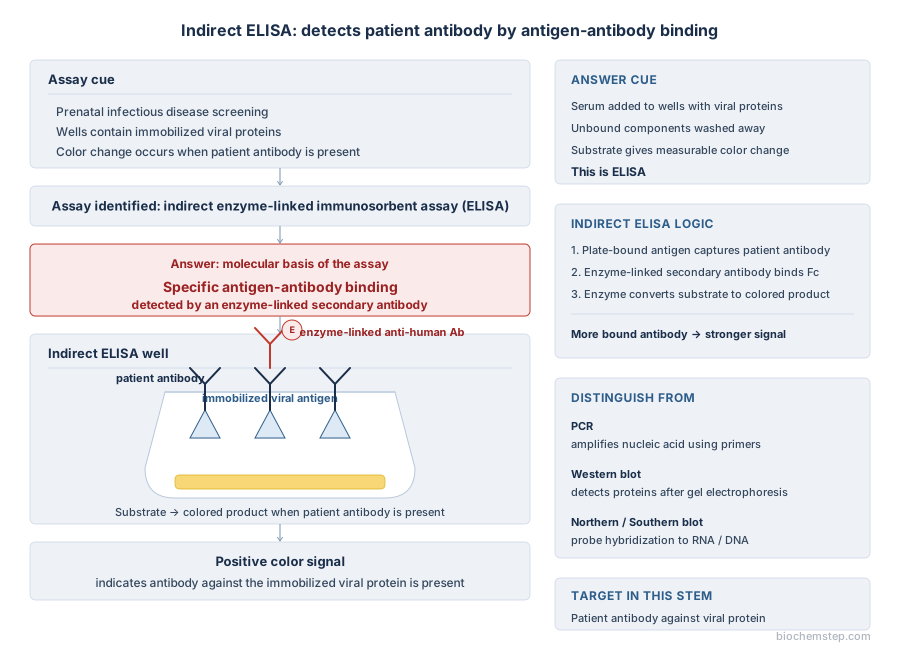
A 27-year-old pregnant woman undergoes routine prenatal infectious disease screening. Her serum is added to microplate wells containing immobilized viral proteins, and unbound serum components are washed away. A detection reagent is then added, followed by a substrate that produces a measurable color change when patient antibody is present.
Which of the following molecular processes underlies the assay used to detect the target molecule in this patient's serum?
- A. Antigen-antibody binding detected by enzyme-catalyzed colorimetric signal generation
- B. Chain termination by incorporation of dideoxynucleotides during primer extension
- C. Fluorescent probe hybridization to complementary chromosomal DNA in intact nuclei
- D. Primer-dependent amplification of a selected DNA region through repeated thermal cycling
- E. Size-based electrophoretic separation followed by antibody detection of transferred proteins
Correct answer: A. Antigen-antibody binding detected by enzyme-catalyzed colorimetric signal generation
This patient is undergoing an enzyme-linked immunosorbent assay to detect a serum antibody during prenatal infectious disease screening. ELISA uses specific antigen-antibody binding, followed by a detection reagent linked to an enzyme that converts a substrate into a measurable colorimetric, fluorescent, or chemiluminescent signal. In an indirect ELISA, immobilized antigen captures patient antibody, and an enzyme-labeled secondary antibody binds the captured antibody, allowing the signal intensity to reflect the presence or amount of target antibody.
Takeaway
ELISA detects antigens or antibodies through specific antigen-antibody binding coupled to enzyme-mediated signal generation. The key distinction from Western blotting is that ELISA is a plate-based binding assay without size-based protein separation.
What this page covers
Practice Step 1-style biochemistry questions on ELISA antigen or antibody detection, with emphasis on enzyme / mechanism and answer-choice reasoning.
Step 1 practice focus
This preview is organized around ELISA antigen or antibody detection in Immunologic and Protein Detection Techniques within Lab Techniques. It is intended for students practicing enzyme / mechanism questions, where the goal is to connect the vignette clue pattern to the underlying biochemical pathway, enzyme defect, metabolite change, regulatory step, or physiologic consequence.
How to use this page
Review the topic and reasoning focus, then practice Step 1-style questions inside BiochemStep. The question set emphasizes mechanism-first answer-choice reasoning rather than passive content review.