Free Step 1-style question
Musty odor + eczema + fair complexion + developmental delay
A 9-month-old boy is brought to the pediatrician because he has not reached expected developmental milestones for age. He does not babble, transfer objects between hands, or sit without support. He was born at home and newborn screening was not performed. On examination, his complexion and hair color are noticeably lighter than those of his two older siblings. A musty body odor is noted. Serum phenylalanine concentration is 28 mg/dL (normal <2 mg/dL).
Deficiency of which of the following enzymes is the most likely cause of this patient's findings?
- A. Tyrosinase
- B. Phenylalanine hydroxylase
- C. Homogentisate oxidase
- D. Fumarylacetoacetate hydrolase
- E. Tyrosine aminotransferase
Correct answer: B. Phenylalanine hydroxylase
Classic phenylketonuria is caused by deficiency of phenylalanine hydroxylase, which normally catalyzes the hydroxylation of phenylalanine to tyrosine. When this reaction is impaired, phenylalanine accumulates and is diverted into phenylalanine-derived metabolites, including phenylpyruvate, phenyllactate, and phenylacetate; phenylacetate contributes to the characteristic musty odor. Reduced tyrosine production also decreases melanin synthesis, explaining the fair complexion and lighter hair relative to family members. Untreated phenylalanine accumulation is neurotoxic and causes developmental delay.
Takeaway
Classic PKU is caused by phenylalanine hydroxylase deficiency. It presents with developmental delay, fair complexion relative to family members, musty odor, and markedly elevated serum phenylalanine.
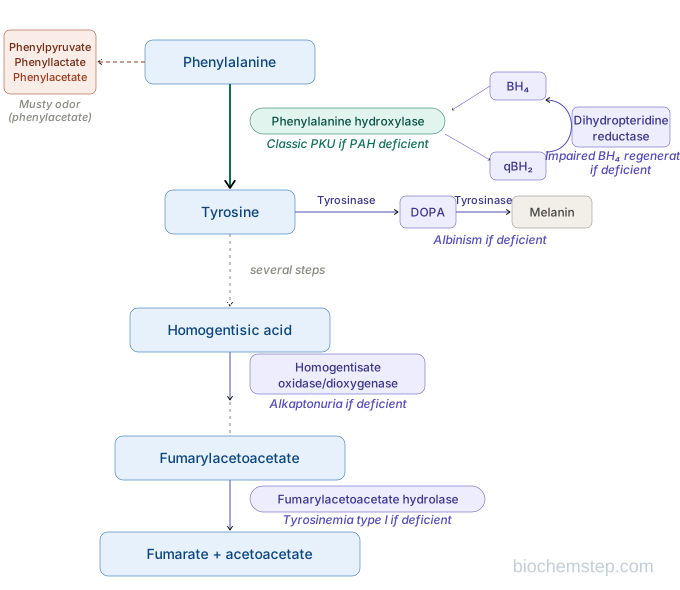
What this page covers
Practice Step 1-style biochemistry questions on Classic PKU (phenylalanine hydroxylase deficiency), including Musty odor, eczema, fair complexion, developmental delay, with emphasis on clinical diagnosis vignette and answer-choice reasoning.
Step 1 practice focus
This preview is organized around Classic PKU (phenylalanine hydroxylase deficiency) in Phenylalanine Metabolism Disorders within Amino Acid Metabolism. It is intended for students practicing clinical diagnosis vignette questions, where the goal is to connect the vignette clue pattern to the underlying biochemical pathway, enzyme defect, metabolite change, regulatory step, or physiologic consequence.
How to use this page
Review the topic and reasoning focus, then practice Step 1-style questions inside BiochemStep. The question set emphasizes mechanism-first answer-choice reasoning rather than passive content review.