Free Step 1-style question
Musty odor + eczema + fair complexion + developmental delay
A 10-month-old boy is brought to the clinic for evaluation of developmental delay. He is not yet crawling. He was born at home and did not undergo newborn screening. Physical examination shows fair skin and light-colored eyes compared with his parents. A musty odor is noted. Serum phenylalanine concentration is 32 mg/dL.
The deficient enzyme in this patient normally catalyzes which of the following reactions?
- A. Oxidative deamination of an amino acid
- B. Hydroxylation of an aromatic amino acid
- C. Decarboxylation of a branched-chain α-keto acid
- D. Transamination of an amino acid to form an α-keto acid
- E. Methyl transfer in sulfur amino acid metabolism
Correct answer: B. Hydroxylation of an aromatic amino acid
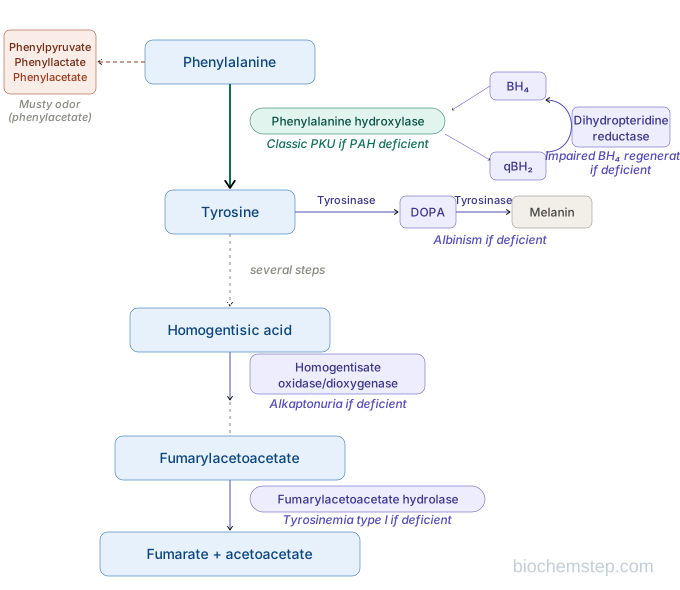
This infant has classic phenylketonuria due to deficiency of phenylalanine hydroxylase. This enzyme normally catalyzes hydroxylation of phenylalanine, an aromatic amino acid, to form tyrosine. The reaction requires tetrahydrobiopterin as a cofactor. When phenylalanine hydroxylase is deficient, phenylalanine accumulates and is diverted into phenylalanine-derived metabolites, including phenylpyruvate, phenyllactate, and phenylacetate; phenylacetate contributes to the musty odor. Reduced tyrosine production also decreases melanin synthesis, explaining the fair skin and light-colored eyes.
Takeaway
Phenylalanine hydroxylase normally hydroxylates phenylalanine to tyrosine using tetrahydrobiopterin. Classic PKU results from failure of this aromatic amino acid hydroxylation step.
What this page covers
Practice Step 1-style biochemistry questions on Classic PKU (phenylalanine hydroxylase deficiency), including Musty odor, eczema, fair complexion, developmental delay, with emphasis on enzyme / mechanism and answer-choice reasoning.
Step 1 practice focus
This preview is organized around Classic PKU (phenylalanine hydroxylase deficiency) in Phenylalanine Metabolism Disorders within Amino Acid Metabolism. It is intended for students practicing enzyme / mechanism questions, where the goal is to connect the vignette clue pattern to the underlying biochemical pathway, enzyme defect, metabolite change, regulatory step, or physiologic consequence.
How to use this page
Review the topic and reasoning focus, then practice Step 1-style questions inside BiochemStep. The question set emphasizes mechanism-first answer-choice reasoning rather than passive content review.