Free Step 1-style question
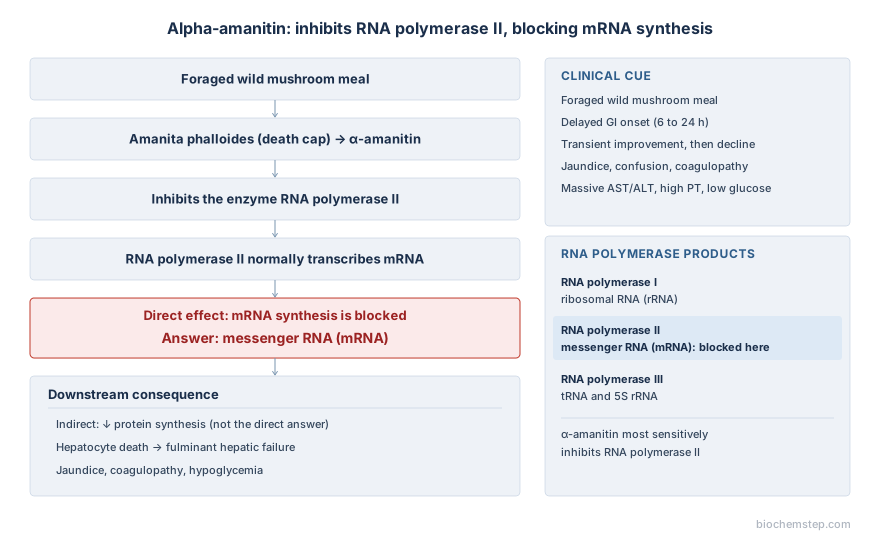
Wild mushroom ingestion + delayed GI illness + honeymoon period + acute liver failure = Amanita phalloides; toxin inhibits RNA Pol II which synthesizes mRNA
A 34-year-old man is brought to the emergency department by his wife because of progressive confusion, jaundice, and weakness. Three days ago, he developed severe crampy abdominal pain, nausea, and profuse watery diarrhea about 12 hours after eating a stew made with wild mushrooms that he had foraged in a local forest. The gastrointestinal symptoms improved temporarily yesterday, but his condition worsened rapidly this morning. On physical examination, he is lethargic with scleral icterus. Laboratory studies are shown below.
| Test | Value | Reference range |
|---|---|---|
| AST | 4,200 U/L | 8–40 U/L |
| ALT | 4,800 U/L | 7–56 U/L |
| Total bilirubin | 6.4 mg/dL | 0.1–1.2 mg/dL |
| Prothrombin time | 28 seconds | 11–15 seconds |
| Serum glucose | 52 mg/dL | 70–100 mg/dL |
The toxin responsible for this patient's presentation most directly inhibits a cellular enzyme required for synthesis of which of the following?
- A. 5S ribosomal RNA
- B. Messenger RNA
- C. Mitochondrial RNA
- D. 28S, 18S, and 5.8S ribosomal RNA
- E. Transfer RNA
Correct answer: B. Messenger RNA
This presentation is most consistent with poisoning from an amatoxin-containing mushroom, classically Amanita phalloides. The delayed onset of severe gastrointestinal symptoms, a brief period of apparent improvement, and subsequent acute liver failure are characteristic. Amatoxins, especially alpha-amanitin, inhibit eukaryotic RNA polymerase II. RNA polymerase II synthesizes messenger RNA, which is then translated into protein. Blocking mRNA synthesis rapidly impairs protein production and causes severe cellular injury, especially in gastrointestinal epithelium and hepatocytes.
Takeaway
Amatoxins cause severe hepatotoxicity by inhibiting RNA polymerase II, which blocks messenger RNA synthesis. RNA polymerase I makes 28S, 18S, and 5.8S ribosomal RNA in the nucleolus, whereas RNA polymerase III makes transfer RNA and 5S ribosomal RNA.
What this page covers
Practice Step 1-style biochemistry questions on Amatoxin inhibition of RNA polymerase II, including Wild mushroom ingestion, delayed GI illness, honeymoon period, acute liver failure, with emphasis on enzyme / mechanism and answer-choice reasoning.
Step 1 practice focus
This preview is organized around Amatoxin inhibition of RNA polymerase II in Transcription and Translation within Molecular Biology. It is intended for students practicing enzyme / mechanism questions, where the goal is to connect the vignette clue pattern to the underlying biochemical pathway, enzyme defect, metabolite change, regulatory step, or physiologic consequence.
How to use this page
Review the topic and reasoning focus, then practice Step 1-style questions inside BiochemStep. The question set emphasizes mechanism-first answer-choice reasoning rather than passive content review.